Third-party certification can provide independent assurance about specific product attributes, depending on the standards and tests involved. It doesn't confirm whether your body can absorb it, activate it, or use it at all. A supplement can carry every quality seal available and still be biologically inert if the formulation ignores how the compound actually travels through your digestive system to reach target tissue.
Key Takeaways
- Third-party testing verifies the attributes included in the tests performed. It says nothing about bioavailability or whether the dose produces any biological effect.
- A supplement can contain the exact ingredient at the exact listed dose and still fail if the molecular form or delivery mechanism is wrong.
- Bioavailability is the gap between what a label claims and what your cells actually receive.
- The failure modes that matter most for gut health, metabolic support, and detox are nearly invisible to certification testing.
- Etta Vita addresses both sides: quality assurance practices supported by third-party product testing, and formulations built around actual deliverability.
What Does Third-Party Testing Actually Confirm?
Third-party testing involves independent laboratory analysis of specific supplement quality and safety attributes. Depending on the tests performed, it may assess ingredient identity, potency, purity, or particular contaminants.
This provides valuable independent information about the attributes tested. However, it does not automatically guarantee that every ingredient or potential contaminant has been evaluated.
That's not nothing. Independent testing can help identify issues such as inaccurate ingredient amounts, selected contaminants, or undeclared substances, depending on the tests performed. It provides an additional level of quality assurance beyond a manufacturer's own claims.
What it doesn't confirm: whether the ingredient form your body absorbs efficiently was chosen, whether the dose is clinically meaningful, or whether the delivery mechanism keeps the compound intact through your digestive tract and into circulation.
Worth noting: third-party testing verifies only the attributes included in the tests performed. Testing procedures vary by product and production run, with some safety testing conducted at the supplier level rather than on every finished batch. Certification provides information about the specific quality standards evaluated. Efficacy addresses a different question: does the product produce a meaningful biological effect? These are separate considerations, and quality testing alone cannot establish clinical effectiveness.
Why Do Certified Supplements Still Fail to Work?
The gap between a certified ingredient and a bioavailable one comes down to three things: molecular form, delivery mechanism, and formulation design.
Consider a typical scenario. Someone purchases a curcumin supplement carrying a reputable third-party seal. The curcumin is real. The dose is accurate. But curcumin on its own has poor water solubility, and the body's digestive enzymes break it down rapidly before it can reach systemic circulation. Without a bioavailability enhancer like piperine, or a phospholipid delivery system, the compound clears the body before it can act. The test passed. The formulation didn't.
This is the failure mode the supplement industry rarely addresses directly: the difference between ingredient presence and ingredient activity.
A second scenario worth understanding for anyone focused on gut health involves probiotics. A product lists a substantial CFU count per serving, and third-party testing confirms that count at manufacture. But if the capsule design doesn't protect those organisms through stomach acid, most die before reaching the colon where they're needed. What actually arrives is a fraction of what was counted, because the certification captured a manufacturing moment, not a biological reality inside your gut.
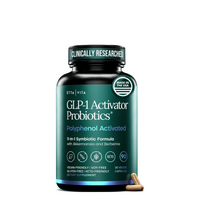
The mechanism matters more than the milestone. Surviving testing doesn't mean surviving your digestive system. This is directly relevant to categories like GLP-1 activator probiotics, where the distinction between organisms that were counted at bottling and organisms that actually reach their target environment in the gut is the entire formulation challenge.
The Bioavailability Gap: What You're Really Evaluating When You Buy a Supplement
Bioavailability is the measurable distance between the dose on a label and the dose your cells actually receive. Four factors determine it.
Ingredient form. Methylcobalamin versus cyanocobalamin. Magnesium glycinate versus magnesium oxide. The form determines absorption rate before any other variable enters the picture. Two products can list the same compound on the label and deliver meaningfully different amounts to your bloodstream because of which form was chosen.
Delivery mechanism. How a supplement is designed to transit the digestive system changes how much of an ingredient survives to reach target tissue. A compound that degrades in stomach acid won't arrive at the intestine intact unless the formulation accounts for that journey. Different delivery approaches are suited to different compounds, and not every product requires the same design.
Co-factor presence. Some compounds require specific co-factors to activate. Fat-soluble vitamins, in particular, often depend on supporting nutrients being present in the same formulation. When those co-factors are missing, the primary ingredient has nowhere to go even if it arrives intact.
Dose relevance. A dose can be real and still be subclinical. Testing confirms the amount present. It doesn't confirm whether that amount clears the threshold at which the compound has been studied to produce an effect.
When you're evaluating any supplement, the questions worth asking aren't just "is this ingredient in here?" The better questions are: in what form, at what dose, with what delivery design, and alongside what supporting compounds? Third-party testing answers the first question. You have to investigate the rest yourself, or choose a brand that's already done that work.
You can review Etta Vita's available formulations and ingredient information in the full shop collection
Seven Ways a Certified Supplement Can Still Fail You
Certification can provide valuable assurance. It isn't sufficient to establish effectiveness.
- Wrong ingredient form. The compound is real but in a form your body absorbs poorly.
- No delivery protection. Probiotics, enzymes, and acid-sensitive compounds are destroyed in stomach acid when capsule design ignores that transit.
- Missing co-factors. The active ingredient is present, but the supporting compounds required for it to activate aren't included.
- Subclinical dose. The amount is accurately tested but sits below the threshold where the compound has demonstrated any meaningful effect.
- Post-manufacture degradation. Certification happens at manufacture. Heat, light, and time degrade certain compounds before the bottle ever reaches you.
- Formulation interference. Some ingredients compete for the same absorption pathways. Poor formulation design can cause ingredients to reduce each other's bioavailability rather than support it.
- No bioavailability enhancer. Fat-soluble compounds without a fat carrier, or poorly soluble extracts without an absorption agent, pass testing and underperform in the body.
A certified product can fail on any of these without violating a single testing standard. The seal tells you nothing about them. For a broader orientation to ingredient science and what to look for across formulation categories, Etta Vita's health guides are a useful educational starting point.
Acting on Bioavailability vs. Hoping the Seal Is Enough
The table below captures the practical difference between choosing a formulation built around deliverability and staying with whatever carries the most visible certification seal.
| Choosing Bioavailability-First | Relying on Certification Alone |
|---|---|
| Ingredient form selected for absorption efficiency | Ingredient form may be chosen for cost, not bioavailability |
| Delivery mechanism designed around digestive transit | No protection against stomach-acid degradation |
| Co-factors included where the science supports them | Co-factors absent; activation depends on chance |
| Dose built around clinical relevance | Dose accurately tested, potentially subclinical |
| Quality assurance practices supported by third-party product testing | Seal printed on packaging, underlying testing scope unclear |
| You know what you're actually getting | You know what was put in, not what arrives |
How Etta Vita Approaches Both Problems at Once
Most brands stop at certification because it's the most visible credential and the simplest story to tell. Etta Vita treats third-party verification as the baseline, not the finish line.
Bioavailability is an important consideration in formulation design. Ingredient form, appropriate co-factors, and delivery characteristics can affect how compounds behave during digestion. Evaluating these factors helps distinguish the amount listed on a label from the amount that may reach its intended site of action.
Etta Vita incorporates third-party product testing into its quality assurance practices. Testing procedures may vary by product and production batch, with some safety testing conducted at the supplier level. Free delivery is included on all orders. If you have specific questions about an ingredient form or delivery mechanism before you buy, customer support is available seven days a week to walk through it with you.
If your focus is on gut health and metabolic wellness, you can review Etta Vita's GLP-1 Activator Probiotics for its listed ingredients and product information.
What Honest Limitations Look Like Here
No supplement, regardless of how well it's formulated, substitutes for the foundational inputs your body depends on: sleep, diet quality, stress, and movement. A precisely designed gut health formula won't offset a consistently inflammatory dietary pattern, and that's worth saying plainly.
The time needed to evaluate a supplement varies depending on its ingredients, intended outcome, and individual response. Some effects may become noticeable sooner, while others require a longer period of consistent use.
Independent quality testing can provide assurance about specific product attributes, but it does not establish clinical effectiveness. Etta Vita emphasizes both quality assurance and thoughtful formulation as part of its approach to supplement development.
Frequently Asked Questions
Can a supplement contain the right ingredient and still not work?
Yes, and the mechanism is direct. The ingredient can be real, accurately dosed, and certified clean, but if it's in a molecular form your body absorbs poorly, or if the delivery design doesn't protect it through stomach acid, it clears the body without producing any effect. Form and delivery determine whether anything actually happens after you swallow the capsule.
What's the real difference between third-party tested and clinically effective?
Third-party testing can help verify specific product attributes, such as ingredient identity, potency, or the absence of particular contaminants, depending on the tests performed. Clinical efficacy means the compound produces a measurable effect in a human body at the dose that actually arrives at target tissue. A product can clear every testing standard and still contain a dose that sits below the threshold where the ingredient has shown any effect. They're separate standards answering separate questions.
How do I know if a supplement's dose is clinically relevant?
You'd need to look at research on the specific ingredient form, not just the compound name in general. The dose shown to produce an effect in published research for a specific outcome is the benchmark to compare against. If a supplement contains a fraction of that amount, the certification is accurate and the dose is still subclinical. Etta Vita's formulations are built around dose relevance, not just dose presence.
Does bioavailability matter equally for all supplements?
It doesn't. Fat-soluble compounds, acid-sensitive probiotics, and poorly soluble plant extracts carry much higher bioavailability sensitivity than water-soluble vitamins at standard doses. If your focus is gut health, metabolic support, or detox, the ingredient form and delivery mechanism have an outsized effect on whether the product produces any result at all.
Why don't more supplement brands address bioavailability directly?
Because it's far easier to market a certification seal than to explain formulation chemistry. A seal is visible and simple. Explaining why one form of an ingredient outperforms another requires educating the consumer and inviting scrutiny of the formulation itself. Brands that lead with bioavailability are signaling confidence in the science behind their products, not just the cleanliness of their manufacturing process.
How long does it take to know whether a supplement is working?
It depends on the compound and the outcome you're measuring. Probiotic effects on gut microbiome composition typically require consistent use over several weeks. Mineral repletion timelines vary based on starting deficit. It depends on the supplement, the ingredients involved, and the outcome you're measuring. Some effects may become noticeable sooner, while others require a longer period of consistent use. The appropriate evaluation timeline varies by product and individual response.
What should I look for beyond the certification seal?
Look for ingredient form specificity on the label, not just compound names. "Magnesium glycinate" tells you more than "magnesium." Look for information about how the formulation is designed to support digestive transit where that's relevant to the compound. Check whether co-factors are included where the science supports their presence. And look for brands willing to be transparent about their quality assurance approach rather than pointing only to a seal printed on packaging. Understanding what was tested, and how, is the information that actually protects you.